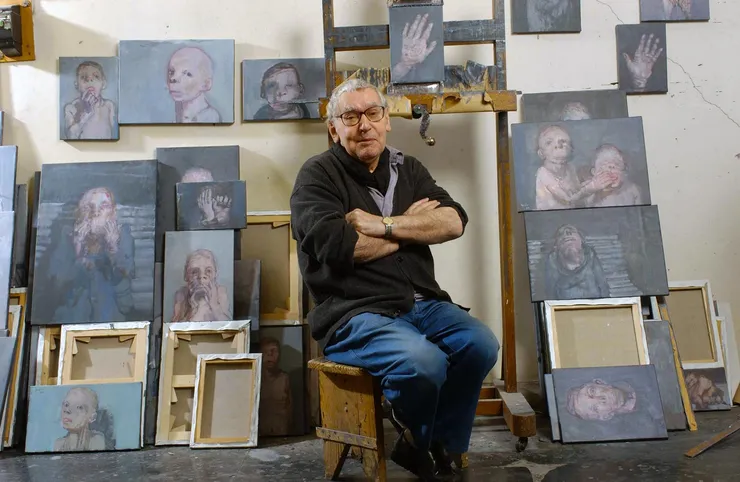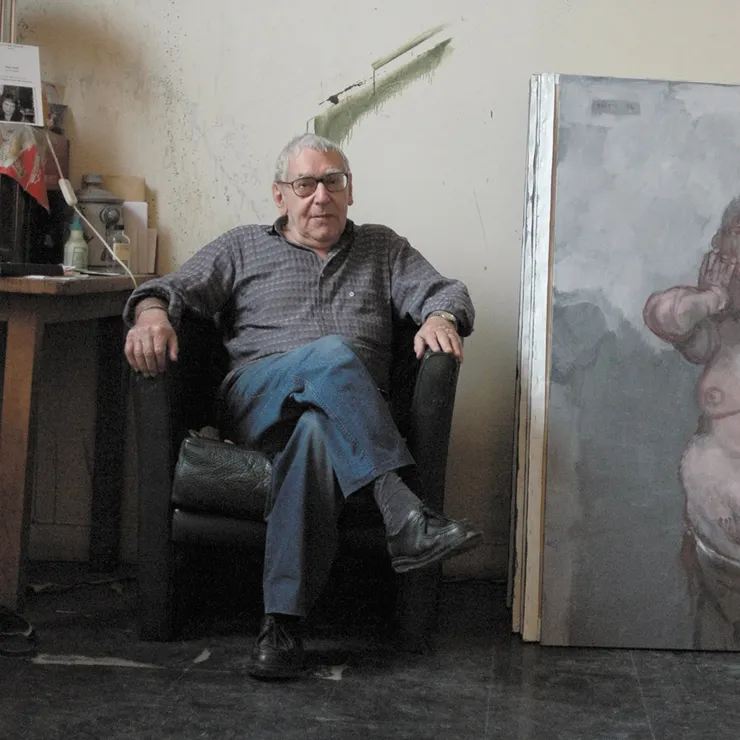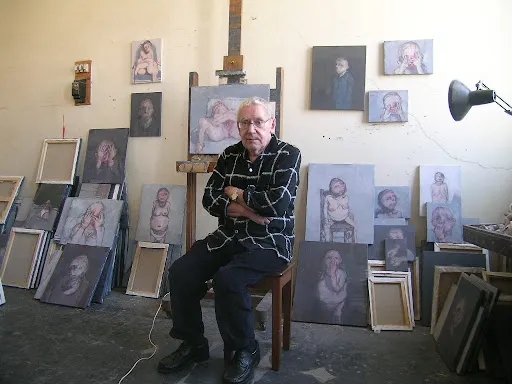
Jean Rustin 1928-2013
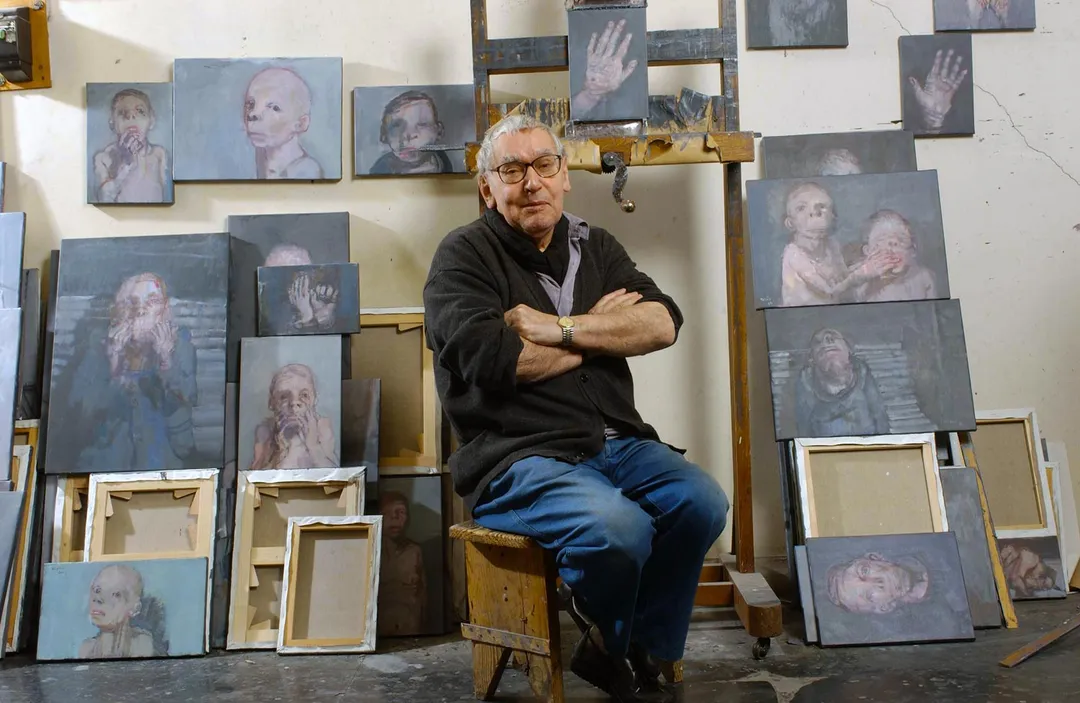
Born in 1928, Jean Rustin was a French painter whose work spans both abstraction and figuration. He grew up in a modest family and developed a passion for drawing and painting from an early age. After completing his secondary studies in Berry and Poitiers, he moved to Paris at 19 to enroll at the École des Beaux-Arts, where he attended Nicolas Untersteller’s studio. In the 1950s, Rustin established himself as an abstract painter, creating lyrical and colorful works that were exhibited annually at the Galerie La Roue in Paris. In 1971, a major retrospective at the Musée d’Art moderne de la Ville de Paris marked a turning point in his career: finding his paintings "too beautiful," he decided to break with abstraction and return to figuration. From the early 1970s onwards, Rustin developed a singular body of work focused on the human body, often nude, isolated, and confronted with vulnerability and existential anxiety. His figures, painted in sparse settings, reflect solitude, fragility, and unease, evoking both admiration and controversy — some exhibitions, for instance in Créteil in 1982, were partially censored due to the shocking nature of certain works. Represented in numerous international public collections and exhibited in France and abroad, Jean Rustin left behind an intense and unique oeuvre, marked by a profound exploration of the human body and condition.